

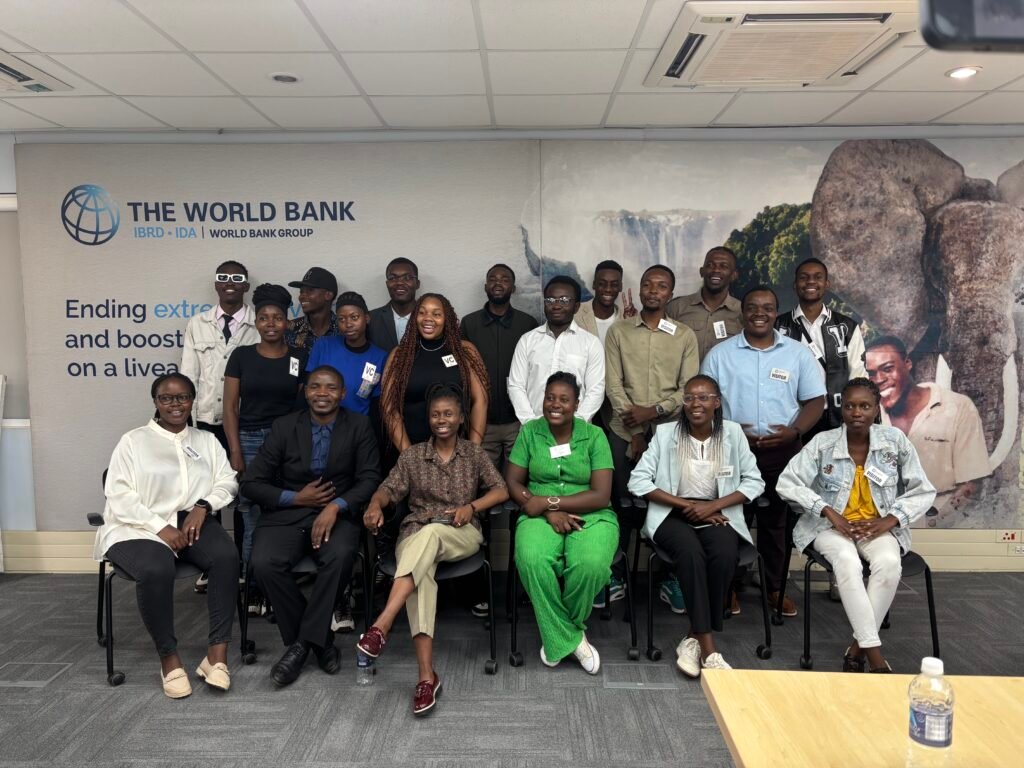
The Evoke Zimbabwe Climate Futures Challenge was a youth-focused digital learning and storytelling program implemented in Zimbabwe between 17 November and 13 December 2025. The initiative formed part of the global World Bank Evoke Network, and was supported through the World Bank–Mastercard Foundation Partnership. The program was designed as a pilot to explore new approaches to youth engagement that combine artificial intelligence, climate education, storytelling, and blockchain-enabled results-based financing.
Implementation of the program involved collaboration between international partners, local innovation hubs in Harare and Bulawayo, and specialist facilitation partners, including Lightbulbs & Lazers Research Consultants, a Zimbabwe-based creative research and storytelling studio with experience in digital skills training and narrative-led communication.
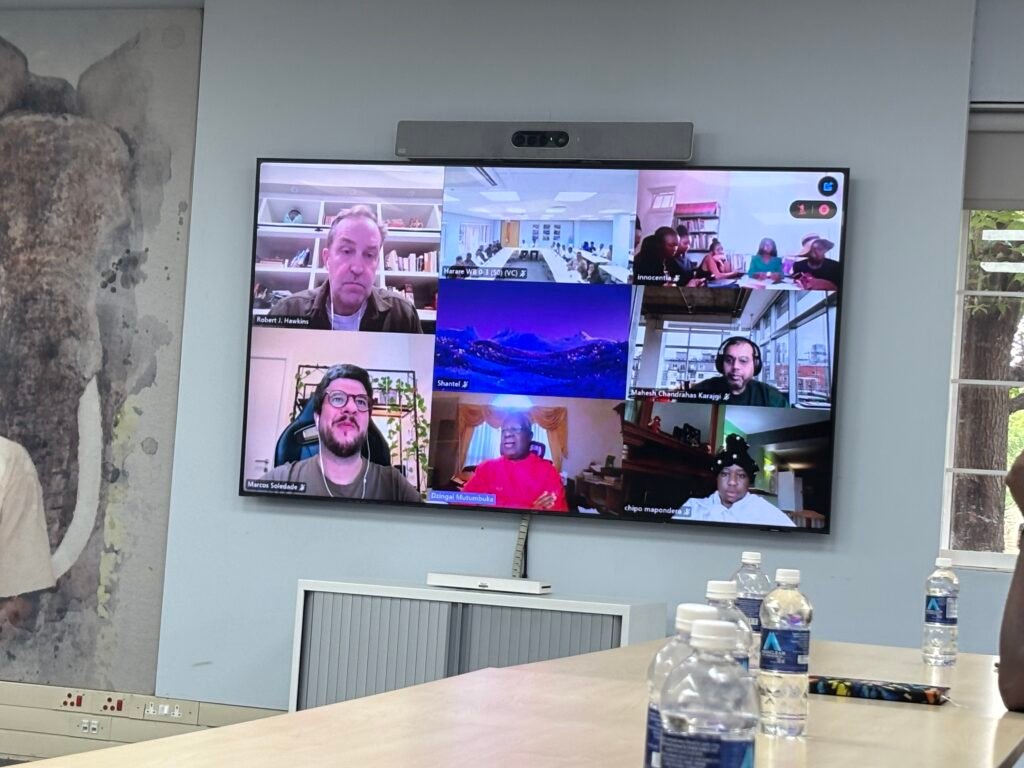
The Zimbabwe program was coordinated under the leadership of Bob Hawkins, and formed part of a broader effort to test results-driven youth development models that link learning outcomes to transparent financing mechanisms.
Program Objectives and Design
The primary objective of the Evoke Zimbabwe Climate Futures Challenge was to equip young people with 21st-century digital and creative skills while strengthening their understanding of climate risk, resilience, and systemic drivers of environmental vulnerability. The program emphasized collaborative problem solving, narrative development, and ethical use of emerging technologies.
Participants were tasked with imagining Zimbabwe ten years into the future (2035), identifying climate challenges likely to affect communities and livelihoods, and proposing viable solutions. These ideas were required to be communicated through a 24-panel AI-enhanced graphic novel, supported by a concise climate action message and a written reflection on the team’s creative process.
Participating Service Providers
Program delivery was decentralized across four Zimbabwean service providers, each responsible for recruiting, training, and mentoring youth teams in their respective locations:
- Uncommon (Harare)
- Impact Hub Harare (Harare)
- Eveline Trust (Bulawayo)
- Bantwana Zimbabwe (Bulawayo)
All service providers operated under a shared curriculum and performance framework, ensuring consistency in learning objectives while allowing flexibility to accommodate participants from diverse educational and professional backgrounds.
Facilitation, Research, and Training Support
As part of the program’s facilitation ecosystem, Lightbulbs & Lazers Research Consultants contributed research-informed training and narrative development support to the Impact Hub cohort. This engagement combined facilitation, observational research, and skills transfer, with a focus on strengthening storytelling structure, ethical use of AI tools, and contextual alignment between climate narratives and Zimbabwe’s socio-economic realities.
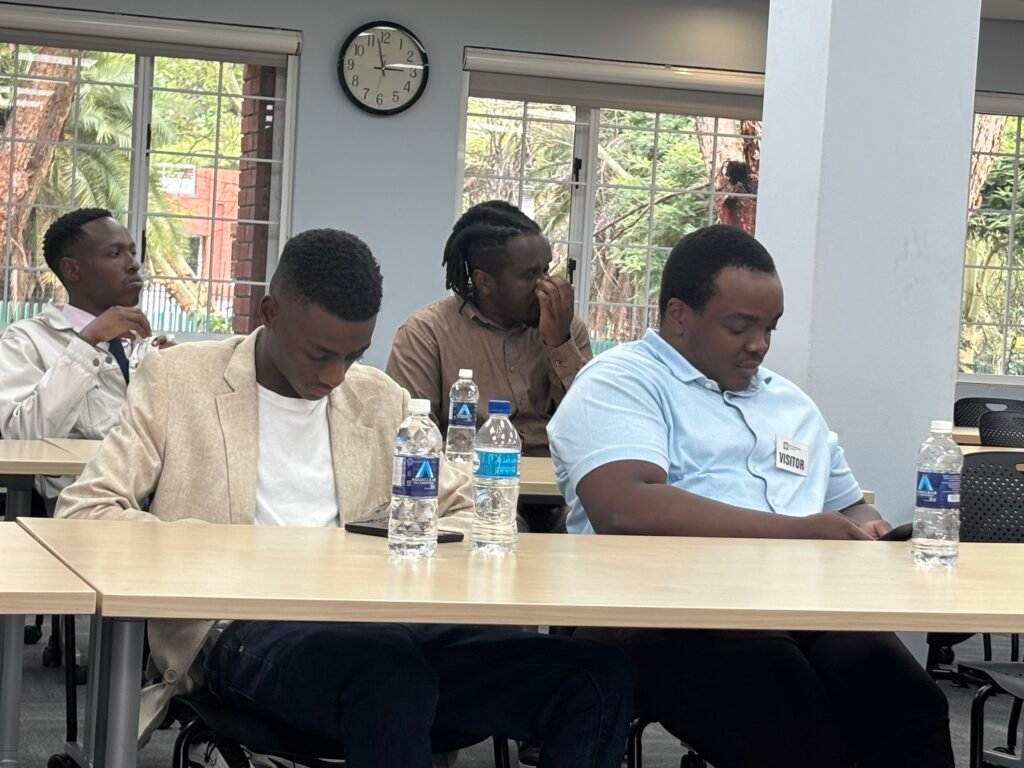
According to a facilitation report developed during the program, one Impact Hub training session engaged 15 participants, with female participation accounting for approximately four participants. The cohort included a mix of recent school leavers and participants from non-creative and non-technical professional backgrounds, highlighting both the program’s accessibility and the diversity of its learning base. Insights from this engagement informed refinements to facilitation approaches and provided qualitative data on participant readiness, collaboration dynamics, and narrative confidence.
The Lightbulbs & Lazers representative for this engagement was Eugene Ramirez Mapondera, who was subsequently called upon to serve as a judge within the program’s results-based reward system, linking facilitation insight with formal evaluation responsibilities.
Learning and Creative Development Phase
Throughout the program period, youth participants engaged in a structured sequence of learning activities covering climate resilience, AI-assisted storytelling, teamwork, and leadership. Teams worked collaboratively to research climate challenges, develop future scenarios, and translate these concepts into coherent narrative arcs suitable for graphic storytelling.
Facilitation across cohorts emphasized clarity of message, coherence of storytelling arcs, and responsible integration of AI-generated content within human-led creative processes.
Judging and Results-Based Financing
Following the submission phase, completed projects were assessed by an independent panel of judges using a standardized evaluation rubric. Submissions were evaluated against predefined criteria, including originality, understanding of climate risks and systemic drivers, narrative clarity, emotional impact, and feasibility of proposed solutions.
The judging process was a central component of the program’s results-based financing (RBF) model. Evaluation outcomes directly influenced whether participating service providers met the required performance thresholds for final payment.
Blockchain-Enabled Accountability
To ensure transparency and accountability, all evaluation scores and payment decisions were managed through a blockchain-enabled smart contract system. This system recorded assessment results, enforced payment conditions, and ensured that funds were released only when agreed performance benchmarks were met, creating an auditable and tamper-resistant record of program outcomes.
Significance and Future Implications
The Evoke Zimbabwe Climate Futures Challenge (2025) represents one of Zimbabwe’s early large-scale experiments integrating AI-assisted learning, creative climate storytelling, and blockchain-supported results verification within a single youth development framework. Through partnerships involving the World Bank, the Mastercard Foundation, local service providers, and specialist facilitators such as Lightbulbs & Lazers Research Consultants, the initiative tested a model that links youth learning outcomes directly to transparent and performance-based financing.
Lessons from the Zimbabwe pilot are intended to inform future iterations of the Evoke model and contribute to broader discussions on technology-enabled accountability and youth-led climate action across the region and beyond.